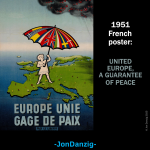
The peace project that Brexit never understood

Sixty-eight years ago, on 25 March 1957, the Treaty of Rome was signed by six European countries – France, Italy, West Germany, Belgium, The Netherlands, and Luxembourg.
It marked the birth of the European Economic Community, later known as the European Union. This ambitious new community emerged from the ruins of the Second World War, driven by a singular purpose: to secure lasting peace through unity.
The eleven founders of the European Union, including Britain’s wartime leader Winston Churchill, recognised that Europe’s brutal history of conflict demanded a new approach.
Twice in the 20th century, the continent had been devastated by world wars that began within its own borders.
To prevent history from repeating itself, these visionary leaders sought to create a social and political union of European nations – not merely a trading arrangement, but a commitment to coexistence, cooperation, and peace.
As articulated in the Treaty of Rome, the goal was “ever closer union among the peoples of Europe.” The achievement of six countries that had so recently been at war with each other was nothing short of remarkable.
Just months after the Treaty’s signing, Churchill delivered his final speech about Europe at London’s Central Hall, Westminster.
His message was clear:
“My message to Europe today is the same as it was ten years ago – unite. Europe’s security and prosperity lie in unity.”
This founding vision seems increasingly misunderstood in Britain.
Many Brexiters view the EU as a mere economic pact, overlooking its deeper purpose of fostering peace and unity.
Yet, on the continent, the importance of this community of nations remains widely understood and appreciated.
By severing ties, Britain has told its European allies that the remarkable EU project – built to safeguard peace and security – is less valuable to us than it is to them.
The question remains: Can our relationship with the rest of Europe ever truly heal?

- Anniversary of the Treaty of Rome: Watch this video and weep